Advanced medicine to help your pet live a better, more comfortable life.
We understand that seeing your pet experience unusual symptoms or act out of the ordinary can be stressful – especially if you don’t know what’s wrong. Fortunately, our veterinary dermatology team is made up of experts in diagnosing and treating diseases of the skin or ears, and we’re here to help.
Our commitment is not just to treat illnesses; it’s to enhance the well-being of your pet and be with you every step of the way.
Conditions we treat.
If your pet has a skin condition, you’ll have an entire dermatology team helping to improve your pet’s quality of life so you can get back to what matters most – spending precious moments together.
Allergies (both environmental and food-related)
Acute and chronic disease of the skin and ears
Autoimmune diseases
Parasitic skin diseases (like mange)
Fungal infections (like ringworm)
Services we offer.
Your pet will receive unparalleled medical care during their time at the hospital (and they’ll be spoiled with love and attention, too).
Advanced diagnostics
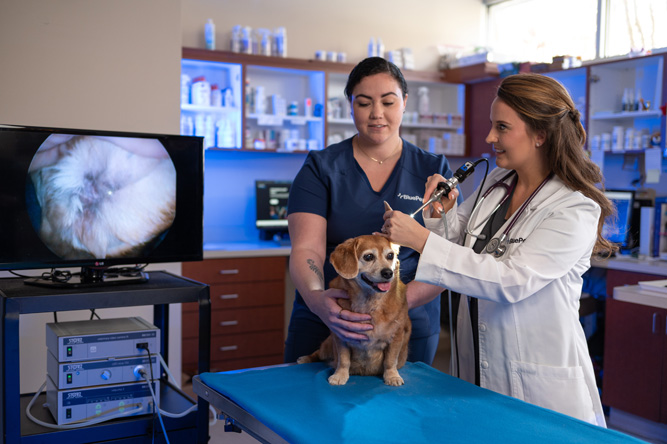
Your pet can’t tell us what’s wrong, so we use sophisticated diagnostics and imaging tools to uncover the source of issues like itching, hair loss or recurring ear infections.
Skin biopsy
Skin cytology
Trichogram
Skin scrapings
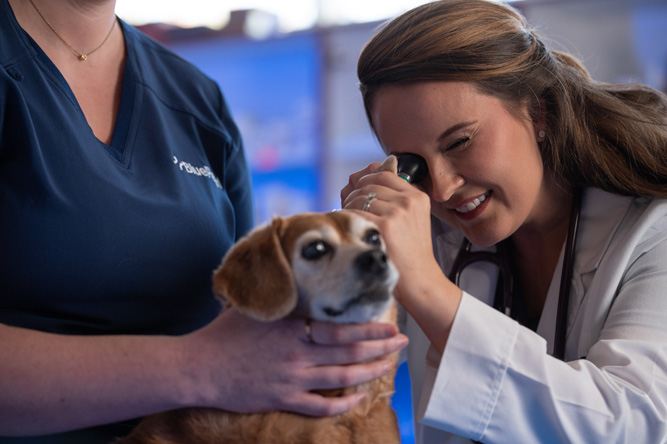
Video otoscopy
Bacterial and fungal cultures
Intradermal allergy testing
Blood/urine testing
Treatment plans
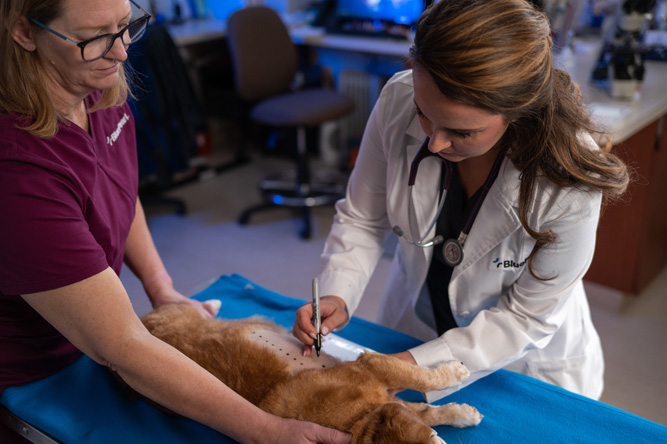
Just as no two patients are the same, neither are their treatment plans. Our dermatology team has experience with a range of advanced procedures and minimally invasive care options to get your pet on the path to wellness, including:
Medications (oral and topical)
Allergy immunotherapy
Laser surgery
Deep ear flushes
Our board certified specialists and dermatology team.
Experience makes all the difference.
Our dermatology team is made up of veterinarians, vet technicians and assistants, and support staff with rigorous training and experience in specialty medicine. The team works hand in hand to provide the comprehensive, compassionate care your pet needs and deserves. Because we’re a multidisciplinary hospital, the team can consult the expertise of other specialty departments, too.
Dr. Jill Abraham has served on the Credentials Committee for the American College of Veterinary Dermatology for a number of years. She has a special interest in feline dermatology and immune-mediated skin diseases.
Education
Diplomate, American College of Veterinary Dermatology
Residency, Veterinary Dermatology, University of Pennsylvania, Philadelphia
Internship, Red Bank Veterinary Hospital, Red Bank NJ
Doctor of Veterinary Medicine, University of Pennsylvania, Philadelphia
Bachelor of Arts, Wesleyan University, Middletown CT
Off duty
Dr. Abraham enjoys spending time with her friends and family and exploring New York city with her dog Norman. She loves watching movies but really prefers to be outdoors.
We want you to be prepared for your pet’s visit to the dermatologist, so you have one less thing to worry about. Our entire BluePearl team will be with you every step of the way.
Before your visit
Make an initial appointment by calling us directly or via referral from your pet’s primary vet.
We’ll request records from your primary or emergency vet before your first visit and collaborate with them to discuss your pet’s history and current condition.
During your visit
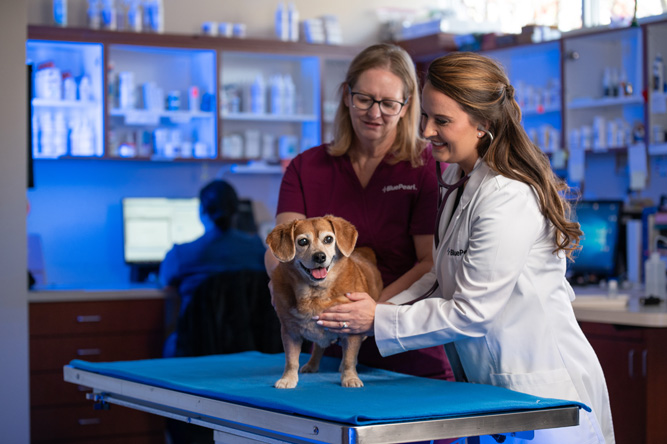
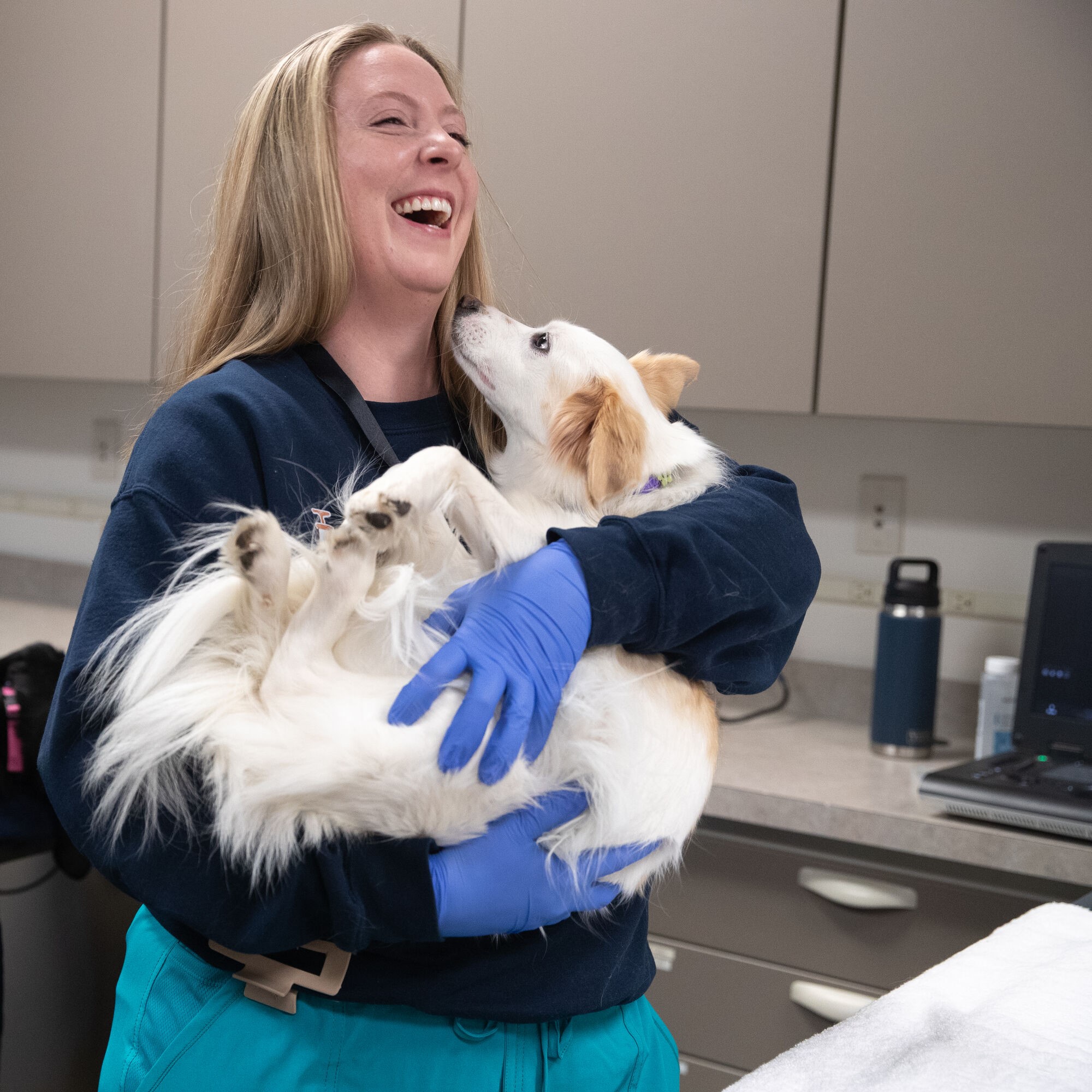
When possible, we’ll examine your pet with you by their side to make them more comfortable. If additional tests are needed for a diagnosis, we’ll discuss those options with you.
You’ll have plenty of time and opportunity to ask questions as we go over your pet’s diagnosis together.
Before you leave, you’ll receive a detailed treatment plan, discharge instructions and any recommended medications. We’ll schedule a recheck appointment and make sure you’re aware of any symptoms you should watch out for at home.
After your visit
Our team will continue to partner with your primary veterinarian as part of the ongoing management of your pet’s care.
You know your pet better than anyone, and you play a crucial role in their treatment plan. If you have any concerns about providing care at home (such as giving medication, maintaining a specific diet or monitoring your pet’s symptoms), let us know – we’re here for you.
Frequently asked questions.
A veterinary dermatologist specializes in diagnosing and treating diseases of the skin, ears, hair, nails and allergies in pets.
Conditions commonly treated include:
Environmental and food allergies
Chronic or recurrent ear infections
Bacterial and fungal skin infections
Parasite-related skin disease
Autoimmune skin disorders
Hormonal (endocrine) skin conditions
Hair loss disorders
Skin masses and unusual growths
Dermatologists focus on identifying the root cause of skin problems and not just treating the symptoms.
Skin disease can appear in many ways. Common signs include:
Excessive scratching, licking or chewing
Red, inflamed or thickened skin
Hair loss or bald patches
Recurrent ear infections
Scabs, sores or crusting
Unpleasant odor
Head shaking
Darkened skin
Changes in coat quality
If these signs persist or keep returning, specialty evaluation may help.
You should consider visiting a dermatology veterinarian if:
Skin or ear issues are recurring despite treatment
Symptoms persist for weeks or months
Your pet requires repeated courses of antibiotics or steroids
The diagnosis is unclear
Your primary care veterinarian recommends specialty testing
Chronic skin problems are often manageable long term, but they benefit from a thorough, specialized approach.
Diagnosis often involves a combination of:
Detailed medical history
Skin cytology (examining skin cells under a microscope)
Skin scrapings to check for parasites
Fungal cultures
Allergy testing (blood testing or intradermal skin testing)
Biopsies in complex cases
Food trials for suspected food allergies
Because many skin diseases look similar, diagnostic testing is key to creating an effective treatment plan.
At your pet’s first hospital visit, the dermatology team will:
Review your pet’s full medical history
Discuss diet, environment and prior treatments
Perform a thorough skin and ear examination
Recommend diagnostic testing as needed
Develop a customized treatment plan
Skin conditions can be complex, so the first visit is often detailed and may take longer than a routine appointment.
Some infections improve within a few weeks, but chronic conditions, especially allergies, often require long-term management.
It may take:
Several weeks to control active infections
Several months to fine-tune allergy treatment plans
Ongoing monitoring for lifelong conditions
The goal is to significantly reduce flare-ups and improve your pet’s comfort and quality of life.
Many chronic skin conditions, particularly allergies, cannot be cured but can be successfully managed.
Ongoing care may include:
Prescription medications
Allergen-specific immunotherapy (allergy shots or oral drops)
Specialized diets
Medicated shampoos or topical treatments
Regular ear care
With consistent management, most pets experience substantial improvement.
You can make an appointment directly with our hospital, but we also welcome referrals from your primary care veterinarian.
If referred, medical records are shared to ensure coordinated and efficient care.
Collaboration is central to specialty care. The dermatology team:
Shares diagnostic results and treatment plans
Provides updates throughout care
Offers guidance for long-term management
Transitions routine follow-up back to your primary care veterinarian when appropriate
This team-based approach supports continuity of care.
The most frequently diagnosed skin issues include:
Allergic dermatitis (environmental or food-related)
Flea allergy dermatitis
Bacterial skin infections (pyoderma)
Yeast infections
Ear infections (otitis)
Hot spots (acute moist dermatitis)
Early treatment can prevent minor issues from becoming chronic problems.
Consider specialty evaluation if:
Ear infections keep coming back
Infections do not fully resolve with treatment
Your pet needs frequent medications
There is persistent head shaking, pain, or discharge
The ear canal becomes thickened or narrowed
Chronic ear infections can become progressively more difficult to treat, so early intervention can make a significant difference.
Make an appointment.
Take the first step to getting your pet back to their best self – call us to speak with the dermatology team and make an appointment.
Prioritize your pet’s health with the experts in specialty medicine.