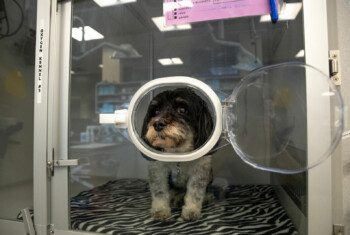
Cancer treatment for pets has advanced significantly in recent years, borrowing from human medicine and offering new possibilities for managing cancer in dogs and cats. Depending on the type of cancer and its grade and stage, treatment may help pets live longer with a good quality of life.
Veterinary oncologists use several approaches, often combining them based on each pet’s needs. These include:
- Surgery
- Radiation therapy
- Chemotherapy
- Targeted therapy
- Immunotherapy and cancer vaccines
Goals of Treatment in Veterinary Oncology (Cure and Remission vs. Palliation)
Veterinary cancer treatment focuses on three primary goals: First, preserving quality of life; second, slowing disease progression; and third, managing clinical signs. These layers of care ensure humane, ethical treatment goals.
A cure means eliminating the cancer; remission means no cancer can be detected, while partial remission means the cancer has decreased but remains detectable. Palliative care focuses on relieving signs and maintaining comfort.
Veterinary oncology places emphasis on minimizing side effects and maintaining comfort throughout treatment. Pets can’t understand why cancer therapy might make them feel sick, so balancing potential benefits with treatment-related discomfort is especially important.
Whether the goal is a cure, long-term remission or palliative care, treatment means more than extending a pet’s life; it’s about helping your pet enjoy as many comfortable, good-quality days as possible.
Surgical Oncology: The First Line of Local Defense
Many cancers in dogs and cats develop as solid tumors. When a suspicious mass is found, veterinarians recommend diagnostic tests, like fine needle aspiration or biopsy, to learn more. Cancer grading and staging can help determine how aggressively the tumor may behave and whether it has spread.
For many localized tumors, surgery is often an option. The goal is to remove the cancerous tissue while preserving healthy tissue and normal function. Surgery may be performed to try and eliminate the cancer – or to relieve signs and improve comfort.
Planning for Surgery
Before surgery, your veterinary team considers the tumor’s size, location and spread to surrounding tissues. Imaging tests, like ultrasound or CT scans, help determine whether the tumor can be safely removed and how much tissue can be taken. Depending on the findings, your veterinary surgeon may recommend one of three approaches:
- Wide excision: Removing the entire tumor with a border of surrounding healthy tissue (the surgical margin) to reduce the risk of leaving cancer cells behind.
- Marginal excision: Removing the tumor along its visible edges when a wider excision may damage nearby structures. This approach carries a greater risk of leaving microscopic cancer cells behind.
- Debulking: Removing part of a tumor when complete removal isn’t possible or when reducing its size may improve comfort or function.
What are Surgical Margins?
After surgery, a pathologist examines the tissue that has been removed to assess the surgical margins, or edges. Clean margins mean no cancer cells are identified at the edges that are examined. This suggests the tumor may have been completed excised. “Dirty” or incomplete margins mean cancer cells are present at the edges. This raises concern that some cancer remains.
These findings, along with the cancer type and grade, help your veterinary oncologist decide whether your pet needs additional treatment.
Sometimes, a tumor is too large or too close to important structures to remove completely. Your veterinarian may recommend other treatments to help control the disease. These treatments may be used before or after surgery, depending on your pet’s diagnosis.
Your veterinary team will explain the potential benefits, risks and expected recovery, helping you understand whether surgery is the right choice for your pet.
Systemic Therapies: Chemotherapy and Targeted Medicine
Unlike surgery, which treats cancer in a specific location, systemic therapies use medications that travel throughout the body to attack cancer cells. These pet cancer treatment options may be recommended when cancer has spread, is at risk of spreading. or can’t be completely eradicated through surgery.
Chemotherapy uses medications to destroy cancer cells or slow their growth. Depending on the cancer and treatment plan, these may be administered by injection, intravenously (IV) or orally.
- Metronomic chemotherapy (MC) uses frequent, low doses of medication given daily or every other day to slow tumor growth rather than aggressively eliminating it.
- Maximum tolerated dose (MTD) chemotherapy uses medications given at scheduled intervals, with doses that balance effectiveness and safety.
- Targeted cancer therapy uses medications that interfere with specific processes cancer cells need to grow and thrive. One example is Palladia (toceranib phosphate), an oral targeted therapy for dogs. This small molecule inhibitor is approved to treat certain canine mast cell tumors. It may also be used to treat other cancers.
Pet Chemotherapy Side Effects
One of the biggest concerns for pet owners is how their dog or cat will tolerate treatment. Veterinary chemotherapy generally emphasizes maintaining quality of life while controlling the disease. Many pets tolerate chemotherapy well, especially cats. Still, side effects like nausea, vomiting, reduced appetite and changes in blood cell counts are possible.
Fortunately, very few pets require hospitalization for chemotherapy-related side effects –mostly short stays for IV fluid.
Studies show up to 30% of pets have mild side effects during radiation or afterward; but only about 5% may need hospitalization for more severe complications.
Fur Loss from Chemotherapy
Most dogs and cats don’t experience fur loss during chemotherapy, but some breeds, such as poodles, may develop significant thinning or changes to their coats. Some cats temporarily lose their whiskers.
Supportive medications, like anti-nausea medications and appetite stimulants, can minimize side effects. Your veterinary oncology team will monitor your pet throughout treatment and can adjust medications or provide palliative options if your pet experiences adverse effects.
Radiation Therapy: Conventional vs. Stereotactic (SRT)
Veterinary radiation therapy for dogs and cats uses carefully directed beams of radiation to damage cancer cells while limiting exposure to nearby healthy tissue. Unlike chemotherapy, which travels throughout the body, radiation targets a specific tumor or area.
Definitive vs. Palliative Radiation
Definitive radiation therapy may be recommended to control or eliminate visible or microscopic cancer in a specific area. Conventional definitive treatment typically involves multiple sessions over several weeks. Dividing the total radiation dose into smaller treatments gives healthy tissues time to recover between sessions.
Palliative radiation therapy focuses on relieving discomfort and improving quality of life rather than achieving long-term cancer control. It may help reduce pain, bleeding, pressure or other clinical signs caused by a tumor. Palliative cat and dog cancer treatments often need few treatments over a short period of time.
What is SRT?
Stereotactic radiation therapy (SRT) uses highly focused radiation to treat certain tumors with exceptional precision. This approach delivers high radiation doses in one to five sessions called fractions.
SRT uses advanced imaging and three-dimensional treatment planning to direct radiation at the tumor while sparing the healthy tissue around it. It may be recommended for certain tumors in the brain, spine, nasal cavity and other locations where precision matters. Because accurate positioning is essential, pets generally need anesthesia for each session, so they stay completely still.
SRT vs. SRS
Stereotactic radiation surgery (SRS) is a specific type of stereotactic radiation treatment in which the entire radiation dose is delivered in a single session, whereas SRT typically involves delivering radiation over multiple sessions, often three to five. Despite its name, SRS does not involve surgery or incisions.
Radiation Possible Side Effects
Side effects depend on the area treated, the radiation dose, and your treatment goals. Some occur shortly after treatment, while others may develop months or even years later. The severity and timing of side effects depend on the protocol chosen for your pet.
Short-term effects may include:
- Temporary skin irritation
- Hair loss or coat change in the treated area
- Changes in appetite
Long-term effects are less common but may include:
- Tissue scarring
- Permanent coat changes
- Damage to nearby structures
Your veterinary oncology team will explain the potential benefits, possible side effects, and recovery time before recommending radiation therapy.
Emerging Frontiers: Immunotherapy and Cancer Vaccines
Newer cat and dog cancer treatments are being developed to help the immune system recognize and attack cancer cells. Unlike chemotherapy, which acts directly on the cells, immunotherapy stimulates or directs the body’s immune response. Pet chemotherapy protocols being used or studied in veterinary medicine include:
- Therapeutic cancer vaccines
- Monoclonal antibodies
- Other immune-modulating treatments
The Oncept canine melanoma vaccine is a dog cancer treatment for patients with Stage II and III oral melanoma. It’s designed to stimulate an immune response against cancer cells in dogs.
Autologous cancer vaccines are created using tissue collected from the pet’s own tumor. They’re designed to help the immune system recognize cancer cells. These individualized treatments are still being studied, and their effectiveness varies by cancer and treatment type.
Histotripsy is another emerging, non-invasive cancer treatment that uses ultrasound waves to mechanically destroy tumor tissue without surgical incisions. While not technically immunotherapy, the procedure liquifies cancer cells that can potentially trigger an immune response to remaining cancer cells.
While they offer promising possibilities, these pet treatment protocols are still emerging. Your veterinary oncologist can explain whether they may be appropriate for your pet, including options available through clinical trials.
Comparing Pet Cancer Treatment Options at a Glance
Dog and cat cancer therapies depend on the type and stage of cancer, your pet’s overall health, and the goals of treatment. Here is a look at the four common approaches:
Surgical Removal
- When it’s used: Often recommended for localized solid tumors, including certain sarcomas, mast cell tumors and carcinomas.
- What to expect: Generally performed in a single hospital visit, followed by a recovery period of several weeks.
- Potential side effects: Pain, wound-healing complications or an incision that reopens.
Chemotherapy
- When it’s used: Often recommended for cancers affecting multiple areas of the body, such as lymphoma (blood cancer) or cancers with a high risk of spreading.
- What to expect: Treatment may involve outpatient visits every one to three weeks over months. Some medications can be given at home.
- Potential side effects: Temporary fatigue, reduced appetite, vomiting, diarrhea or lower white blood cell counts.
Radiation Therapy
- When it’s used: May be recommended for tumors that can’t be completely removed surgically or some tumors affecting nasal cavity or brain.
- What to expect: Treatment typically involves multiple sessions over several weeks, usually with anesthesia to keep your pet still.
- Potential side effects: Skin irritation, inflammation near the site or delayed changes in treated tissue.
Stereotactic Radiation Therapy (SRT)
- When it’s used: Possible option for certain tumors, including some brain, spine or other masses that are difficult to treat surgically.
- What to expect: A short course of highly focused radiation, often delivered in one to five sessions under anesthesia.
- Potential side effects: Temporary inflammation or other effects involving nearby tissues. Delayed complications are also possible, depending on the treatment location.
Targeted Oral Therapies
- When they’re used: May be recommended for certain cancers, including mast cell tumors and some carcinomas.
- What to expect: At-home oral administration on a schedule, which may be alternate days.
- Potential side effects: With Palladia: loss of protein through kidneys, hypertension, diarrhea.
Freqently Asked Questions with BluePearl Veterinary Oncologist, Dr. Jeilene Hambly, DVM
- How much does veterinary cancer treatment cost on average? The cost of cancer treatment varies significantly depending on type of cancer and recommended treatments, ranging from several hundred dollars to many thousands. Your veterinary oncologist can provide an individualized estimate and discuss treatment options that align with your goals and budget.
- Can I combine holistic care with conventional oncology? Certain complementary therapies, such as nutritional support, may be incorporated alongside cancer treatments. However, it’s important to discuss any supplements or alternative therapies with your veterinary oncologist, as some may interfere with cancer treatments or cause unintended side effects.
- How do I decide when to treat versus when to choose comfort care? This decision depends on your pet’s cancer diagnosis, prognosis, quality of life, and your family’s care goals. Your veterinary oncologist can help you weigh the potential benefits and side effects of treatment, recognizing that prioritizing comfort and quality of life is always a valid and compassionate choice.
- What is the most widespread misconception owners hold regarding chemotherapy tolerance in dogs and cats? The biggest misconception is that pets experience chemotherapy the same way humans do, with severe nausea, hair loss, and significant illness. In veterinary medicine, our primary goal is to maintain an excellent quality of life. I typically tell owners about 20-30% of pets will have mild side effects, and about 5% of patients will need to be hospitalized from chemotherapy side effects.
- When should a client choose Stereotactic Radiation (SRTS) over conventional fractionated radiation therapy? Stereotactic radiation therapy can be an excellent option for certain well-defined tumors because it delivers highly targeted radiation in fewer treatments, reducing the number of anesthetic events. However, the best approach depends on tumor type, size, location, and proximity to sensitive structures.
- How do you guide a pet parent who feels guilty about choosing palliative therapy over aggressive multimodal treatment? I always remind owners that choosing palliative care is not giving up on their pet but rather making a thoughtful decision to prioritize their comfort and quality of life. There is no single right treatment approach for every family, and our goal is to support their decisions while ensuring their pet remains as happy and comfortable as possible.
- In cases where local surgical control is achieved but margins are ‘dirty’ or narrow, how do you decide whether to pursue immediate revision surgery, active surveillance, or follow-up radiation/chemotherapy? This decision depends heavily on the tumor type, histologic grade, location, and risk of local recurrence, as not all tumors with incomplete or narrow margins will behave the same way. When feasible, revision surgery or radiation may be recommended to improve local control, while active surveillance may be appropriate for select lower-risk tumors; chemotherapy is generally considered based on metastatic risk rather than incomplete margins alone.
- How do you choose between a Maximum Tolerated Dose (MTD) protocol and a metronomic (low-dose, daily oral) protocol for a patient? In what scenarios does metronomic chemotherapy shine? I typically favor conventional maximum tolerated dose chemotherapy when there is stronger evidence for its effectiveness against a particular cancer, whereas metronomic chemotherapy may be considered for select patients when the goal is to slow disease progression with a potential less intensive treatment approach. Metronomic chemotherapy can be particularly useful in certain low-grade blood cancers and can also be considered in the maintenance setting, although evidence of benefit varies by tumor type.
- With targeted small molecule inhibitors like Palladia (toceranib phosphate) being administered at home, what critical monitoring steps do you require owners to take to catch adverse effects like protein-losing nephropathy or hypertension early? I emphasize the importance of monitoring appetite, vomiting, diarrhea, energy levels, and any changes in drinking or urination at home, with instructions to contact us promptly if concerning symptoms develop. Regular veterinary rechecks, including bloodwork, urinalysis with urine protein assessment, and blood pressure monitoring, are essential for identifying potential complications such as protein-losing nephropathy or hypertension before they become clinically significant.”
- How are emerging therapies like the canine melanoma vaccine (Oncept) or autologous cancer vaccines changing the prognosis for highly aggressive cancers? Are they best used as standalone options or strictly adjunctive? Cancer vaccines represent an exciting area of veterinary oncology, but the evidence supporting their effectiveness remains limited or inconsistent, and we cannot yet say they reliably improve survival for most cancers. Currently, I generally consider these therapies as potential additions to established treatments, rather than replacements.
- What objective tools or specific quality-of-life scales do you recommend pet owners use at home to track their pet’s well-being daily during active cancer therapy? I recommend owners track their pet’s appetite, activity level, mobility, comfort, and interest in their favorite activities, as subtle changes overtime can help us identify declining quality of life. A general rule of thumb is to consider five things your pet likes to do, and once they stop performing two to three of those things, it may be time to reevaluate their quality of life.
- At what point in the diagnostic process should a general practitioner ideally refer a suspected oncology case to a specialist, and what initial diagnostics should (or shouldn’t) be run beforehand? I encourage early referral to a veterinary oncologist, particularly when a cancer diagnosis is confirmed or strongly suspected, as this allows us to develop a treatment plan before potentially limiting future options. Initial diagnostics such as a fine needle aspirate, baseline bloodwork, and chest x-rays are often helpful prior to your pet’s oncology consultation.
- Given that advanced veterinary oncology can be a significant financial investment, what strategies or tiered treatment plans do you offer to help families maximize their pet’s quality time within a restricted budget? Cancer care is not a one-size-fits-all approach, and there are often multiple treatment options available at different price points. We can prioritize the most impactful diagnostics and discuss options ranging from more aggressive treatments to less intensive therapies or palliative care, depending on the cancer type and the family’s goals.