If your pet is scheduled for surgery, it's natural to have questions about what to expect. While your veterinary team will provide instructions specific to your pet's procedure, preparing your home ahead of time can help make their recovery smoother and give you peace of mind.
Use this checklist to gather a few helpful items before surgery day so you can focus on supporting your pet's recovery.
Your surgery preparation checklist
- Comfortable recovery space. Create a quiet area where your pet can rest with a comfortable bed and, if recommended, a crate or small room to help limit activity during recovery.
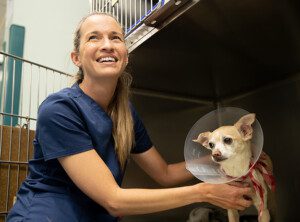
- Cone or e-collar. Your pet may need to wear a cone or e-collar after surgery to help protect the incision while it heals. The cone should extend beyond the end of your pet's nose to help prevent licking or chewing. If needed, we'll provide one on the day of surgery.
- Sling or mobility support. For knee, hip or other hind-leg surgeries, a sling or Help 'Em Up Harness® can provide extra support while your pet regains strength. If appropriate, we'll also provide a sling before your pet goes home.
- Mental enrichment. Recovery often means less physical activity, but mental stimulation is still important. Have a few enrichment items on hand, such as lick mats, low-motion puzzle toys or KONG® toys, to help keep your pet engaged during recovery.
- Medications and appetite support. Pill Pockets® or other treats can make medications easier to administer. It can also be helpful to have your pet's favorite high-value food available in case their appetite is reduced after surgery.
Other helpful items.
These additional items can help support a smoother recovery and keep your pet comfortable at home:
- Waterless pet shampoo, since your pet may not be able to have a bath for several weeks.
- Potty pads and baby wipes in case of accidents during the first few days after surgery.
- Canned pumpkin, if recommended by your veterinarian, to help support normal bowel movements after surgery.
- Rugs or non-slip mats to provide secure footing on hardwood or tile floors.
- A plan for navigating stairs, as many pets should avoid stairs during recovery.
- If you have a large dog, arrange for two people to help unload your pet from the car once you arrive home. Our team will help you safely get your pet into your vehicle after surgery.
Here for your pet. Here for you.
Every pet's recovery is unique. Before your pet goes home, your BluePearl veterinary team will review your discharge instructions, answer your questions and make sure you feel prepared to care for your pet during recovery.
Following your pet's personalized treatment plan and your veterinary team's recommendations is the best way to support a safe and successful recovery.