

Conditions treated
Learn which conditions our specialty team can help diagnose and treat, so your pet gets the right care for their needs.
Request appointment
Take the next step toward answers and treatment by scheduling a specialty consultation for your pet.
Skylos Sports Medicine’s surgery department combines the expertise of board-certified surgeons with advanced surgical instrumentation to achieve unparalleled patient outcomes in orthopedic surgery.
From the common to the complex, covering the entire musculoskeletal system, our surgery department is equipped and experienced in diagnosing and treating all orthopedic conditions through all life stages of the canine and feline companion.
Many orthopedic conditions are not straightforward to diagnose but obtaining an accurate and timely diagnosis is essential to maximize patient well-being. The first step is to schedule an appointment.


If your pet has a condition or injury that requires advanced care and procedures, you’ll have an entire surgery team helping to improve your pet’s quality of life so you can get back to what matters most – spending precious moments together.
Your pet will receive unparalleled medical care during their time at the hospital (and they’ll be spoiled with love and attention, too).
Your pet can’t tell us what’s wrong, so we use sophisticated diagnostics and imaging tools to uncover the source of the problem.
Just as no two patients are the same, neither are their treatment plans. Our surgery team has experience with a range of advanced procedures and minimally invasive options to get your pet on the path to wellness, including:
Experience makes all the difference.
Our surgery team is made up of veterinarians, vet technicians and assistants, and support staff with rigorous training and experience in specialty medicine. The team works hand in hand to provide the comprehensive, compassionate care your pet needs and deserves. Because we’re a multidisciplinary hospital, the team can consult the expertise of other specialty departments, too.
With over a decade of experience as a board-certified surgeon, Dr. Fink focuses exclusively on orthopedic surgery, including fracture repair, angular limb deformity correction, total hip replacement and minimally invasive surgical techniques. He uses advanced technologies such as 3D printing to create patient-specific models that assist in planning complex orthopedic procedures.
Dr. Fink is a passionate educator who shares his knowledge through lectures and by training surgical residents in advanced techniques and skills. He enjoys working closely with pet owners and veterinary colleagues to ensure they fully understand diagnoses and treatment options, and is always happy to “nerd out” about biomechanics, implant design and 3D printing.
Outside the hospital, Dr. Fink has been affectionately accused by his siblings of being a “hobby thief,” dabbling in fine art, woodworking, digital design and 3D printing. He enjoys spending time with his wife and son, as well as their chickens and three dogs.
Dr. Jess Leasure is passionate about minimally invasive orthopedic surgery and orthopedic oncology. She is also interested in improving the management of end-stage osteoarthritis, which keeps her up to date on research into joint replacement techniques as well as alternative treatment solutions.
She is as enthusiastic about teaching as she is about learning. Dr. Leasure provides surgical instruction to veterinarians as a continuing education and laboratory lecturer and brings that experience to each of her clients, both during and after consultation.
Appreciating that no two families are alike, she enjoys the challenge of tailoring treatment plans to address individual patient needs. She believes that the best outcomes are achieved through compassion and an understanding of the underlying condition. By actively engaging each family throughout the treatment process, she aims to create a positive experience for everyone.
Outside of the hospital, Dr. Leasure enjoys spending time on the Chesapeake Bay with her family, including her husband, Chris, who is also a veterinarian, and their two dogs, a Border Terrier named Hudson and a rescue named Georgia. She is a veteran traveler and avid foodie who enjoys boating and rooting for the Orioles in the summer and cheering on the Capitals in the winter.
Dr. Peter Lotsikas specializes in sports-related injuries and getting performance and working dogs back to full function. His clinical focus is on minimally invasive surgery and total joint replacement. He is certified to perform Biomedtrix hip replacements, TightRope CCL and TPLO procedures for cruciate repair, sliding humeral osteotomy and CUE joint resurfacing procedures for elbow dysplasia. When appropriate, he incorporates orthobiologics.
Whether an elite athlete or an aging companion, Dr. Lotsikas focuses on getting to know each patient to ensure the best possible outcome for their particular needs and goals. He takes immense pride in tailoring his surgical and medical recommendations to meet the needs of his diverse patient population.
Dr. Lotsikas is a veterinary surgical consultant for Arthrex Vet Systems and a national instructor in arthroscopy and minimally invasive knee stabilization. He is credited with developing the technique guide for the TightRope system for stabilization of traumatic hip luxation, now used worldwide. He serves on the medical education advisory board for Zoetis and is a Zoetis ELITE speaker on pain, anesthesia and sedation.
He has contributed to numerous peer-reviewed journals, co-authored a chapter in the textbook Mechanisms of Disease in Small Animal Surgery and served as section chief and author for the orthopedic disorders of the hind limb chapter in Canine Sports Medicine and Rehabilitation. Dr. Lotsikas is a scientific reviewer for Veterinary Surgery Journal and Journal of the American Animal Hospital Association and previously reviewed for the Veterinary Orthopedic Society and American College of Veterinary Surgeons symposiums. He is active in continuing education and has presented at major veterinary surgery meetings across the United States. As a frequently requested author, he writes about sports-related injuries in canine athletes for publications including Clean Run Magazine, Pointing Dog Journal, Retriever Journal and Just Labs Magazine.
Dr. Lotsikas and his wife, Dr. Faith Lotsikas, share three young daughters and a small farm in Maryland. His personal interests include fishing, hunting, golfing and farming.
At Skylos by BluePearl, our board-certified surgeons and rehabilitation specialists focus on restoring your pet’s mobility and relieving pain. As one of the nation’s premier rehabilitation and surgical centers, we specialize in the complete triad of care: Orthopedics, Sports Medicine, and Rehabilitation Therapy.
We perform advanced orthopedic procedures, including cranial cruciate ligament repairs (such as TPLO), fracture stabilizations, joint replacements, and joint arthroscopy. Following surgery, or as a standalone non-surgical treatment, we offer tailored physical rehabilitation services like underwater treadmill therapy, laser therapy, and structured exercise programs to ensure a safe, comfortable, and successful recovery.
Common signs of orthopedic issues include persistent limping, stiffness when rising, reluctance to run or climb stairs, and favoring a limb. However, surgery is not always the first or only option. Our team works closely with your primary veterinarian to conduct a thorough physical and orthopedic exam, often using digital imaging. Because we house surgical, sports medicine, and rehabilitation specialists under one roof, we recommend surgery only when it is the most effective path to restore your pet’s function, frequently comparing or combining it with non-surgical recovery plans.
Orthopedic surgery focuses exclusively on the musculoskeletal system (specifically the bones, joints, ligaments, and tendons that facilitate movement). Typical procedures include repairing torn ligaments, stabilizing broken bones, and treating joint dysplasia. Soft tissue surgery, in contrast, addresses organs, skin, and other non-bony structures. Because our practice is nationally dedicated to mobility and structural recovery, we specialize exclusively in advanced orthopedics, sports medicine, and complementary rehabilitation therapy.
Give your dog their next chapter. To get started, please contact our hospital directly. Because orthopedic diagnoses rely heavily on high-quality imaging, please ask your primary veterinarian to send us all recent digital X-rays or other relevant diagnostics before your visit. During your appointment, our surgeon will perform a comprehensive orthopedic exam, review the images with you, and discuss all available surgical, sports medicine, and rehabilitation therapy options.
Your pet’s surgery will be performed by a board-certified veterinary surgeon. This means they have completed years of intense, specialized residency training focused entirely on advanced surgical techniques. Complex orthopedic procedures require precise biomechanical knowledge and specialized instrumentation. As a national-level orthopedic center, our specialists perform over 1,200 TPLO procedures annually. Choosing a Skylos surgeon ensures your pet is receiving the highest possible standard of surgical, sports medicine, and rehabilitation care in the country.
Safety is our highest priority. Before any procedure, we perform a thorough diagnostic screening to tailor a precise anesthesia protocol to your pet’s specific health status. Throughout the surgery, a dedicated and highly trained veterinary anesthesia technician continuously monitors your pet’s vital signs (including blood pressure, ECG, oxygen levels, and core body temperature). This attentive, real-time monitoring allows our surgical team to make immediate, proactive adjustments to keep your pet stable and safe.
Most pets undergoing major orthopedic procedures benefit from staying in the hospital overnight. This allows us to provide powerful intravenous pain medications and monitor their comfort continuously.
While we do not have doctors on-site 24/7, our hospital provides continuous, round-the-clock overnight care staffed by dedicated, trained veterinary technicians who monitor your pet’s vital signs and safely assist them as they stand and walk. Our board-certified surgeons remain on call 24/7 for all hospitalized patients. For less invasive procedures, same-day discharge may be possible.
Major orthopedic procedures require an aggressive, proactive approach to pain management. Our goal is to prevent pain before it starts through advanced pain control protocols. We manage discomfort preemptively by administering targeted nerve blocks and local anesthetics before the first incision is made. After surgery, we continue with a structured, multi-modal medication regimen to ensure your pet remains comfortable and willing to use their limb during early recovery.
We use an advanced, multimodal pain management approach, which means combining different classes of medications and therapies that work together to target pain from multiple angles. This strategy allows us to use lower, safer doses of individual drugs while achieving superior pain control. In addition to prescription medications, we incorporate non-pharmacological treatments (such as cold compression, laser therapy, and early, gentle rehabilitation therapy) to reduce inflammation and support healing.
Bone and joint healing requires time and patience. While skin incisions heal in about 10 to 14 days, the bone itself (after a procedure like a TPLO or fracture repair) typically takes 8 to 12 weeks to fully heal. Because recovery doesn’t end in the operating room, we will provide you with a detailed, week-by-week timeline that outlines when your pet can safely transition from controlled activity restrictions to controlled leash walks, and eventually back to normal activity.
Successful outcomes rely heavily on your diligent at-home care, but you are never alone in this process. Our hospital provides unmatched support: you will have a dedicated surgery coordinator guiding you, dedicated veterinary nurses for discharges and follow-up care, and direct 24/7 post-operative cell phone access to your surgeon for ultimate peace of mind. Your primary responsibilities at home will include:
While some mild bruising and swelling are normal, please contact us immediately (using your surgeon’s direct post-op cell phone number) if you notice:
All surgeries carry risks, and orthopedic procedures have specific considerations. These include surgical site infection (which is more serious when implants are used), delayed bone healing, and potential implant failure if a pet is too active too soon. We minimize these risks by operating in dedicated sterile suites, using strategic antibiotics, providing customized recovery plans, and offering unparalleled, direct support to parents throughout the healing process.
The cranial cruciate ligament (CrCL) is a key stabilizer inside the knee, similar to the ACL in humans. A rupture is one of the most common causes of hind limb lameness in dogs and typically results from gradual degeneration of the ligament over time, rather than a single traumatic event. This instability leads to pain, arthritis, and often, damage to the meniscus (the shock-absorbing cartilage in the knee).
TPLO is a specialized surgical procedure that stabilizes a dog’s knee after a CrCL rupture. Instead of attempting to replace the ligament with artificial materials, the surgeon makes a precise, circular cut in the top of the tibia (shin bone) and rotates it to level the slope of the joint. This new, level orientation biomechanically prevents the femur (thigh bone) from sliding backward on the tibia, making the knee instantly stable whenever the pet bears weight. The bone is then secured in its new position with a medical-grade bone plate and screws.
For active, large, or athletic dogs, osteotomy procedures like TPLO are considered the gold standard by board-certified veterinary surgeons worldwide. Studies show that TPLO provides a more consistent, rapid, and predictable return to function and slows the progression of joint arthritis far more effectively than older, suture-based techniques. It directly addresses the biomechanical instability caused by the torn ligament, restoring your dog’s ability to run, jump, and play.
Deciding where to have your pet’s surgery is an important choice. While mobile veterinary surgeons travel to primary care clinics, undergoing a complex procedure at our dedicated, national-level specialty hospital offers several critical medical and logistical advantages:
Safety is our highest priority. Before any procedure, we perform a thorough diagnostic screening to tailor a precise anesthesia protocol to your pet’s specific health status. Throughout the surgery, a dedicated and highly trained veterinary anesthesia technician continuously monitors your pet’s vital signs (including blood pressure, ECG, oxygen levels, and core body temperature). This attentive, real-time monitoring allows our surgical team to make immediate, proactive adjustments to keep your pet stable and safe.
Most pets undergoing major orthopedic procedures benefit from staying in the hospital overnight. This allows us to provide powerful intravenous pain medications and monitor their comfort continuously.
While we do not have doctors on-site 24/7, our hospital provides continuous, round-the-clock overnight care staffed by dedicated, trained veterinary technicians who monitor your pet’s vital signs and safely assist them as they stand and walk. Our board-certified surgeons remain on call 24/7 for all hospitalized patients. For less invasive procedures, same-day discharge may be possible.
The medical-grade plate and screws are designed to be permanent and are not removed unless they cause a specific, rare issue such as localized irritation or infection. Once the bone has fully healed (typically in about 8 to 12 weeks), the implants are no longer required for stability, but they are safely left in place for the life of your pet without causing any discomfort.
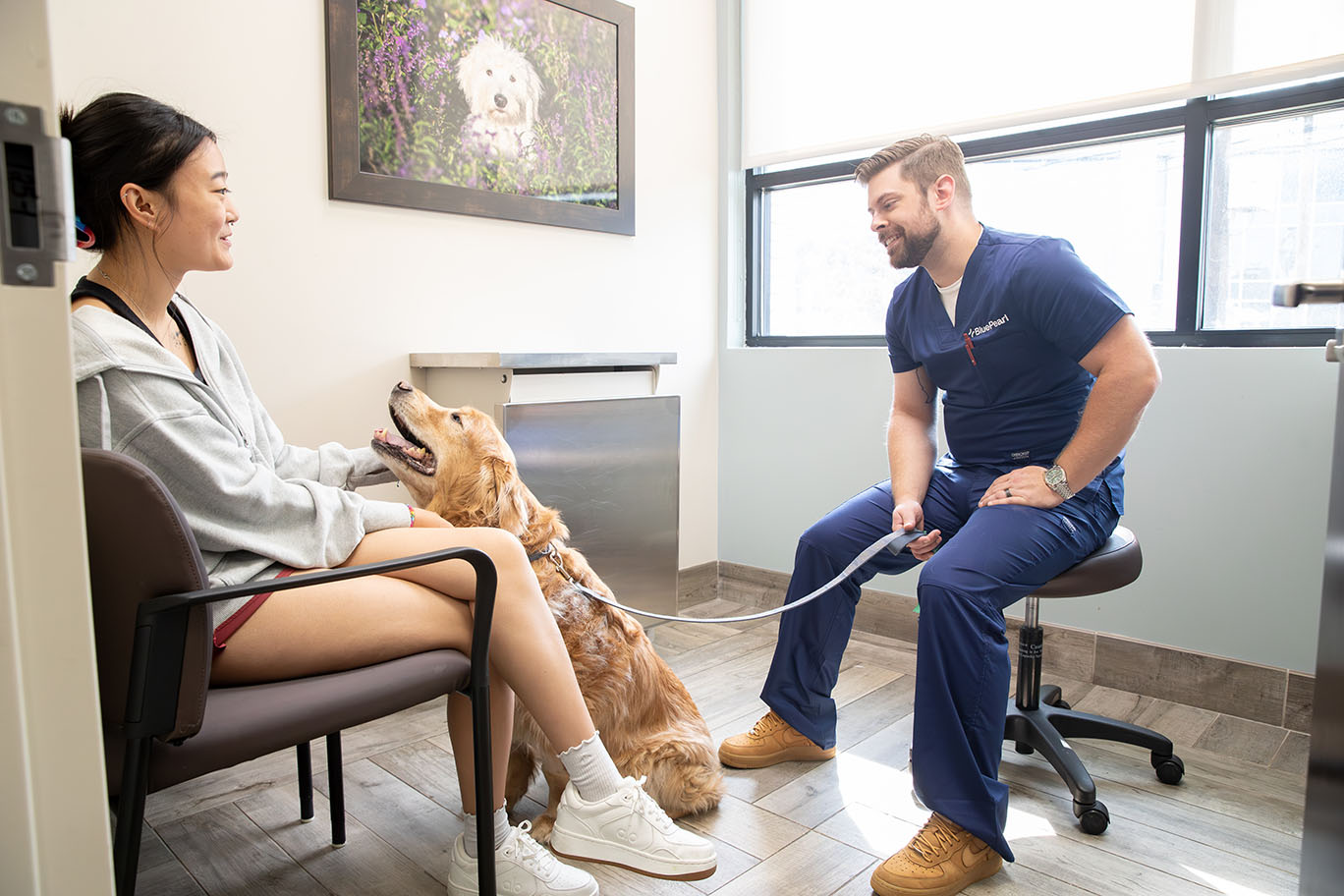
Take the first step to getting your pet back to their best self – call us to speak with the surgery team and make an appointment.
Prioritize your pet’s health with the experts in specialty medicine.