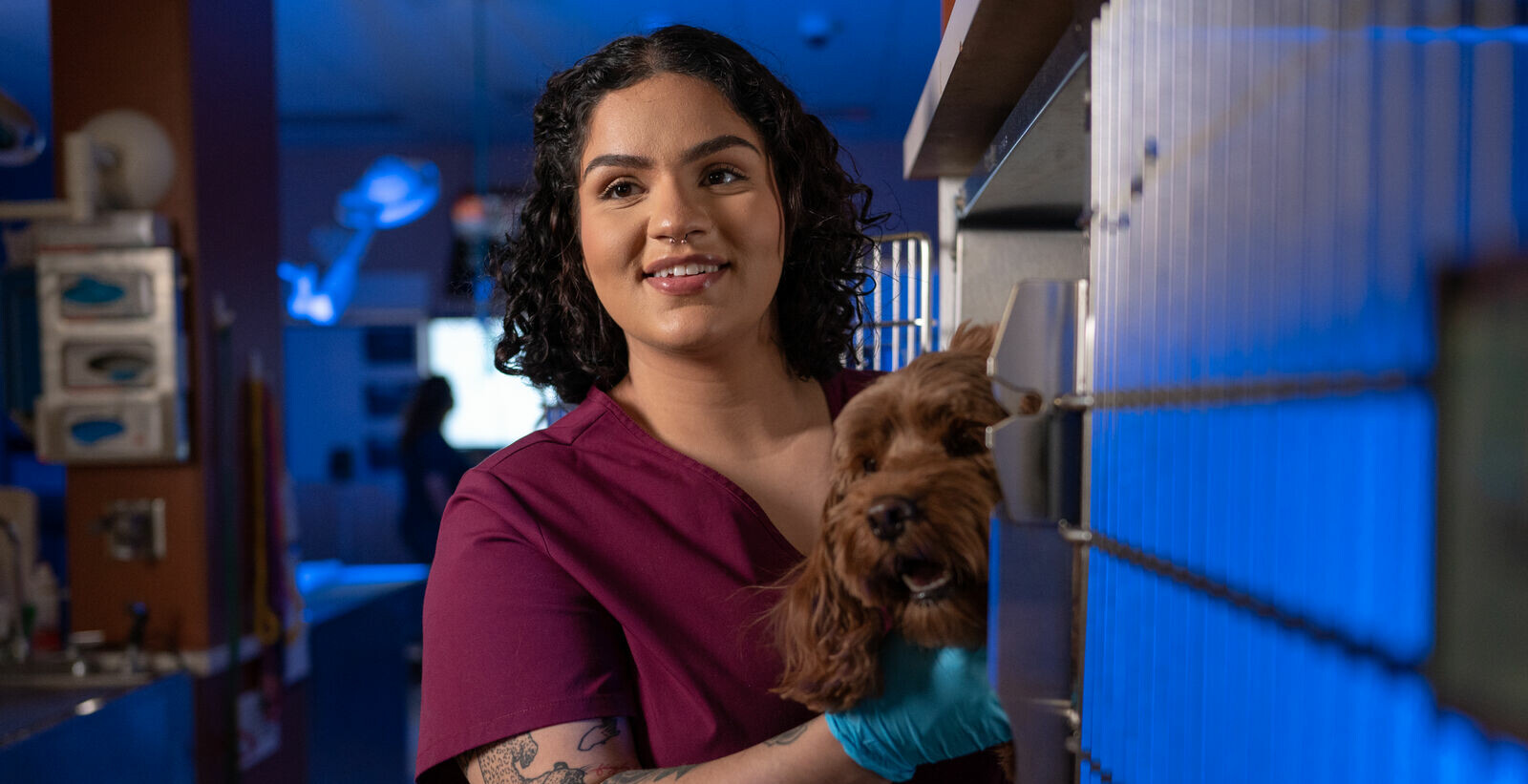
As a pet owner, it’s hard to know when to head straight to the ER and when it’s safe to wait or call for advice. At BluePearl Brandon, our emergency medicine team is here 24/7 to help you make that decision. Some symptoms require immediate care. Others might be managed with close monitoring and follow-up.
When to go straight to the emergency vet.
Always go straight to the ER if your pet:
- Is struggling to breathe
- Collapses or can’t stand
- Has been hit by a car or suffered trauma
- Is bleeding, and the bleeding won’t stop
- Has a swollen, bloated, or painful abdomen
- Ate something toxic (e.g., chocolate, xylitol, grapes, medication)
- Has a seizure lasting more than five minutes, or three or more seizures within a 24-hour period
- Has pale, blue, or gray gums
In these cases, do not delay – time matters.
When to call the emergency pet hospital first.
Call us first if your pet:
- Vomits once but is otherwise alert
- Has mild diarrhea without blood
- Skips one meal, but seems normal
- Has an old limp that isn’t worse
- Is itching or has a minor skin wound
- Shows mild coughing or sneezing without distress
We’ll help you decide whether to come in, monitor at home, or follow up with your primary vet.
What happens when you arrive at our ER.
If you come in, here’s what to expect:
- A technician will triage your pet right away
- Critical patients are treated immediately
- We’ll explain findings, treatment options, and costs before proceeding
- You’ll receive a discharge summary or be advised if hospitalization is needed
Deciding when to visit the pet emergency room — FAQ.
Certain situations require immediate attention at the emergency vet. If your pet is struggling to breathe, it is vital to seek emergency care without delay. Collapsing or an inability to stand are serious symptoms that warrant urgent evaluation. Trauma, such as being hit by a car, also necessitates a prompt visit to the ER. Persistent bleeding that does not stop is a critical condition that needs immediate intervention. A swollen, bloated, or painful abdomen can indicate a severe issue requiring fast action. Ingesting toxic substances, such as chocolate, xylitol, grapes, or medication, is an emergency situation. Seizures lasting more than five minutes, or experiencing three or more seizures within a 24-hour period, are serious and require immediate care. Additionally, pale, blue, or gray gums are signs of distress that should not be ignored. In these cases, do not delay—time is of the essence.
For less urgent situations, it is advisable to call the pet hospital for guidance. If your pet vomits once but remains alert, it may not require immediate ER attention. Mild diarrhea without blood can often be monitored at home initially. Skipping one meal but otherwise appearing normal is generally not an emergency. An old limp that has not worsened may not require immediate care. Minor skin wounds or itching can often be managed with advice from the hospital. Mild coughing or sneezing without signs of distress is typically not urgent. In these scenarios, we can help you decide whether to come in, continue monitoring at home, or follow up with your primary veterinarian.
Upon arrival at BluePearl Brandon, a technician will promptly triage your pet to assess their condition. Critical patients receive immediate treatment to address urgent needs. We prioritize clear communication, explaining our findings, treatment options, and associated costs before proceeding with any care. Depending on the situation, you will receive a discharge summary with instructions for at-home care, or we will advise if hospitalization is necessary for further monitoring and treatment.

Related articles.