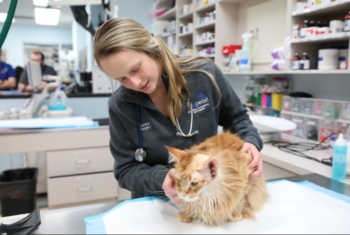
Learning your pet has cancer is difficult enough; worrying about their pain adds to stress. Making matters more complicated, pets often hide their pain, so you may not realize when they need relief. This can lead to unnecessary guilt.
Fortunately, advanced pet cancer pain management has come a long way in recent years. Your veterinary oncology team can alert you to the signs of pain and recommend effective medications designed to help keep them comfortable during cancer treatment.
Recognizing Pain: Why Dogs and Cats Hide Discomfort
Dogs and cats hide pain out of an ancient survival instinct. In the wild, showing weakness could make an animal more susceptible to predators. Unfortunately, this stoicism makes it difficult for human caretakers to recognize that their pet is in pain.
Instead of crying or limping, your dog may wag her tail and greet you at the door. Your cat may keep up his familiar routines. So instead of looking for obvious signs of distress, watch for subtle changes in your pet’s behavior.
Changes in sleep can be particularly revealing. A dog or cat in pain may have a tough time getting comfortable, wake often during the night, pace and act restless. Others may sleep more than usual or become less interested in their surroundings.
Signs of Pain in Dogs with Cancer
- A dog in pain may show signs like these:
- Become less playful or showing less interest in favorite activities
- Hesitate to climb stairs or jump on furniture
- Move more slowly and deliberately
- Pant excessively, even when resting
- Show a decrease in appetite or change in eating habits
- Whine, tremble, or become more withdrawn than usual
Signs of Pain in Cats with Cancer
- Cats often show even more subtle signs of pain than dogs. They may:
- Hide more frequently in closets or under beds
- Sleep more or less than usual
- Stop jumping onto high surfaces
- Groom themselves more or less frequently
- Avoid or miss the litter box
- Show a decrease in appetite or change in eating habits
- Display changes in posture, such as sitting in a hunched position
- Seem more irritable or sensitive to being touched
Pain Assessment through Facial Expressions
Veterinarians sometimes use changes in a pet’s appearance and behavior to assess pain levels.
The Feline Grimace Scale, a widely accepted assessment developed just for cats, is used for acute (post-surgical or injury) pain, rather than chronic (ongoing) pain. It evaluates five facial features: ear, head and whisker position; eye narrowing; and muzzle tension.
Dogs may also show facial changes, including tensing muscles around the eyes and mouth, or favoring certain ear positions. However, the Canine Grimace Scale for pain is still emerging and not yet a standalone evaluation tool.
It is important to remember that facial expressions or grimace scales alone cannot reliably assess all cancer-related pain. Veterinarians consider facial expressions along with many other signs, like posture, movement and behavior.
You know your pet’s normal behavior best. Sharing even slight changes with your veterinary team can help identify pain early and guide you toward the appropriate treatment.
Mechanisms of Cancer Pain in Pets
Discomfort can be caused by a tumor itself, pressure on surrounding tissues or side effects of cancer treatments. Depending on where the cancer develops and how it affects the body, pets may experience different types of pain.
- Somatic pain (bones, muscles and surrounding tissues): This occurs when cancer damages bones or invades muscles and other soft tissues. For example, dog osteosarcoma, a type of bone cancer, can cause pain and difficulty while moving, or limping.
- Visceral pain (internal organs): Tumors affecting organs like the spleen or liver may cause pain by stretching surrounding tissue or putting pressure on nearby organs. Some tumors, such as stomach or intestinal tumors, can also cause painful blockages.
- Neuropathic pain (nerves): Cancer can press against, invade or damage nerves, which interferes with the signals they send across the body. Tumors near the spine or nerve roots may cause pain, weakness, or decreased mobility.
Some pets experience more than one type of pain at the same time. Understanding where it started will help your veterinary team create a treatment plan for your pet’s specific needs.
The Multimodal Analgesia Strategy
Pet cancer pain management often requires more than one medication. This approach, called multimodal analgesia, combines medications that work in different ways to provide optimal relief.
Pain signals travel through the body in several stages: Where they originate (transduction), transmission through the nervous system to the processes that adjust their intensity (modulation), and then their perception by the brain. By targeting different points along this pathway, veterinarians strive to control pain and reduce side effects with lower doses of individual drugs.
Dog and cat cancer pain relief depends on the exact combination of medications, your pet’s overall health, and response to the treatment. Your veterinary oncology team may recommend one or more of the following:
Nonsteroidal anti-inflammatory drugs (NSAIDs)
- Common medications: Carprofen, meloxicam and robenacoxib.
- Used for: Cancer pain relief for bone tumors, soft tissue inflammation and certain other cancers.
- How they work: Reduce inflammation and pain by blocking certain enzymes involved in the production of inflammatory substances.
- Monitoring/Precautions: Never prescribed with corticosteroid or another NSAID; can affect kidneys and digestive system; monitoring kidney and liver function.
Corticosteroids
- Common medications: Prednisone and prednisolone.
- Used for: Direct anticancer effects in certain cancers including lymphoma, reducing inflammation and swelling associated with tumors, particularly those affecting the brain or spinal cord.
- How they work: Reduce inflammation and swelling around tumors.
- Monitoring/Precautions: Increase in thirst, panting, urination and appetite; muscle weakness and gastric upset. Corticosteroids should not be combined with NSAIDs due to increased risk of gastrointestinal ulceration.
Neuropathic modulators
- Common medications: Gabapentin and pregabalin.
- Used for: Managing nerve pain caused by damaged or compressed nerves; persistent pain caused by overly sensitive nervous system.
- How they work: Calm overactive nerve signals to reduce pain sensitivity.
- Monitoring/Precautions: Drowsiness and unsteadiness, especially when treatment begins or doses are increased. Dose adjustments may be necessary in pets with impaired kidney function.
NMDA receptor antagonists
- Common medications: Amantadine.
- Used for: Chronic pain and hypersensitivity.
- How they work: Helps prevent the nervous system from amplifying pain signals, potentially reducing pain sensitivity.
- Monitoring/Precautions: Look for agitation and gastrointestinal upset.
Opioids and transdermal patches
- Common medications: Buprenorphine and fentanyl. A veterinarian may recommend a fentanyl patch for pet hospice care or other situations requiring sustained pain relief.
- Used for: Discomfort after surgery or cancer-related pain.
- How they work: Act on receptors in the brain and spinal cord to reduce pain perception.
- Monitoring/Precautions: Drowsiness, constipation, behavior changes. Close veterinary supervision is required.
Bone-targeted agents
- Common medications: Pamidronate and zoledronate (bisphosphonates)
- Used for: Pain associated with dog osteosarcoma, or cancer that has spread to bones
- How they work: Slow bone breakdown, which may relieve bone tumor-related pain
- Monitoring/Precautions: Close monitoring of kidney function and calcium blood levels is vital.
Never give your pet human pain relievers or change prescribed medications without consulting your veterinary oncology team.
Non-Pharmacologic and Interventional Modalities
Medications are not the only way to manage cancer pain in pets. Certain therapies and simple changes at home can also alleviate discomfort, improve mobility and quality of life. Your veterinary team can recommend additions to your pet’s treatment plan.
Low-level laser therapy (photobiomodulation): Also called cold laser therapy, this non-invasive treatment uses near-infrared light from lasers or LEDs. It’s designed to help reduce inflammation and support tissue healing. However, its effectiveness for cancer-related pain in pets is not well established. Treatment directly over known or suspected tumors is generally avoided due to concerns about its potential effects on cancer cells.
Targeted pulsed electromagnetic field (tPEMF) therapy: This noninvasive pet cancer pain management treatment uses low-intensity electromagnetic pulses to reduce inflammation and discomfort. Research shows some effectiveness for arthritis and post-operative pain, but this therapy has not been well-studied for cancer pain in pets.
- Acupuncture: This therapy involves inserting very thin needles along energy pathways in the body called meridians. This Traditional Chinese Medicine treatment may influence pain signaling, although research on its effectiveness is limited.
- Orthopedic bedding: A supportive, cushioned bed can help reduce pressure on painful areas and make resting more comfortable. Choose bedding that’s easy for your pet to access and place it somewhere quiet.
- Nonslip flooring: Another at-home comfort measure is placing runners, rugs and nonslip mats on floors if pain causes your pet to struggle with their footing on smooth surfaces. Floor coverings reduce the risk of falls and help your pet move around with more confidence.
These approaches to pet cancer pain management work best as part of a total, individualized plan. Your veterinary team will help you decide which options are right for your pet at different stages of their cancer journey.
Cancer pain may be difficult to recognize, but even small changes in your pet’s behavior warrant a closer look. With today’s range of pain management options, your veterinary team can develop a tailored plan to minimize discomfort and support quality of life. By being attentive to your pet’s needs and communicating openly with your veterinary team, you can help make comfort a priority throughout cancer treatment.
Frequently Asked Questions With BluePearl Veterinary Oncologist Dr. Jeilene Hambly.
- Will pain medication make my dog sleep all day? Some pain medications can cause mild sedation, particularly when first started or when doses are increased, but the goal is always to provide pain relief while maintaining a good quality of life. If your pet seems excessively sleepy or less engaged in normal activities, your veterinary team can adjust their medications.
- Can I give my dog human Tylenol or Advil for cancer pain? Never give your pet human pain medication without specific veterinary instructions. Medications such as Advil can cause severe gastrointestinal and kidney damage, while Tylenol can cause serious toxicity, particularly in cats.
- How quickly do bisphosphonate infusions offer bone cancer pain relief? Bisphosphonates may provide pain relief within several days to a couple of weeks, although the response varies between patients.
- What subtle indicators of pain do owners most commonly overlook in cats and dogs diagnosed with cancer? Subtle changes such as decreased activity, reluctance to jump or climb stairs, changes in sleeping habits, and reduced social interaction are frequent overlooked signs of discomfort.
- Why is relying on a single analgesic class like an NSAID rarely sufficient for advanced neoplastic disease? Cancer pain can arise from several different mechanisms, including inflammation, tissue damage, and nerve involvement, which may not respond adequately to a single medication. Combining medications that target different pain pathways can provide more effective relief while potentially minimizing side effects.
- How do you approach bone cancer pain in patients where amputation is not an option for the family? For pets with painful bone tumors, I often recommend a combination of pain medications, palliative radiation therapy, and potentially bisphosphonates to improve comfort. Treatment is individualized based on the severity of pain, risk of fracture, and the family’s goals, with quality of life remaining the primary priority.
- How do you explain the ‘wind-up’ phenomenon (central sensitization) to pet owners, and why is early intervention with drugs like gabapentin or amantadine so crucial to prevent it? When pain persists, the nervous system can become increasingly sensitive, causing pets to experience more intense pain even from relatively minor simulation. Early and consistent pain management is important to limit this process.
- Many owners struggle to tell the difference between cancer pain and veterinary medication side effects (like pacing/panting from prednisone or vocalizing/dysphoria from opioids). How can they distinguish between pain and medication-induced behavior? Medication side effects, such as panting from prednisone or restlessness associated with opioids, often develop shortly after starting a medication or changing its dose, whereas cancer-related pain may become progressively more noticeable over time. However, these signs can overlap, so tracking when symptoms occur and discussing them with your veterinary team can help determine the underlying cause.
- Bisphosphonates (like zoledronate) have shown to be effective for osteosarcoma bone pain. What is the typical timeline for relief after an infusion, and what realistic expectations should owners have regarding its duration? When effective, bisphosphonates may provide relief within several days to a couple of weeks, with benefits potentially lasting several weeks, although responses are highly variable. Not all pets experience meaningful improvement, and repeat treatments may be considered based on their response and overall health.
- There is sometimes confusion around using therapies like cold laser therapy (photobiomodulation) on cancer patients. What are the strict contraindications for using laser therapy near active tumor sites? Low-level laser therapy (photobiomodulation) is generally avoided directly over known or suspected tumors because of concerns that it could influence cancer cell activity, although definitive evidence of tumor stimulation in patients is limited. If laser therapy is being considered for another condition, the treatment location and potential risks should first be discussed with the veterinary oncology team.
- Cats are notoriously sensitive to many pain medications and cannot tolerate standard canine NSAIDs long-term. What are your primary, safe go-to therapies for managing chronic cancer pain in felines? Pain management in cats often involves a combination of medications, such as buprenorphine and, when neuropathic pain is suspected, gabapentin or pregabalin, along with supportive care and tumor-directed treatments when appropriate. Certain NSAIDs may also be considered in carefully selected patients, but their use requires close veterinary supervision and monitoring.
- Sleeplessness and nighttime restlessness are frequently reported by owners of pets with cancer. Does this behavior typically point to uncontrolled somatic pain, neuropathic discomfort, or something else entirely? Nighttime restlessness can be associated with uncontrolled pain, but it may also result from nausea, anxiety, medication side effects, or other medical conditions. I encourage owners to monitor when the behavior occurs and whether it accompanies other signs of discomfort to help their veterinary team identify the cause.
- While medications do the heavy lifting, what are the most impactful, simple environmental modifications (e.g., non-slip rugs, orthopedic beds, ramp placements) that make a dramatic difference in a cancer patient’s daily comfort? Simple modifications such as nonslip rugs, supportive bedding, and ramps can significantly improve comfort and mobility for pets with cancer. I also encourage owners to keep food, water, and resting areas easily accessible and minimize the need for stairs or jumping, particularly for pets experiencing pain or weakness.
- Can you speak to the extreme dangers of owners giving human over-the-counter pain medications (like Tylenol or Advil) to their pets when they suspect their pet is having a breakthrough cancer pain episode? Human pain medications can be extremely dangerous for pets, even at relatively small doses. Ibuprofen (Advil) can cause severe gastrointestinal ulceration and kidney damage, while acetaminophen (Tylenol) can cause life-threatening toxicity, particularly in cats; owners should never administer these medications without veterinary guidance and should contact their veterinary team if their pet experiences breakthrough pain.