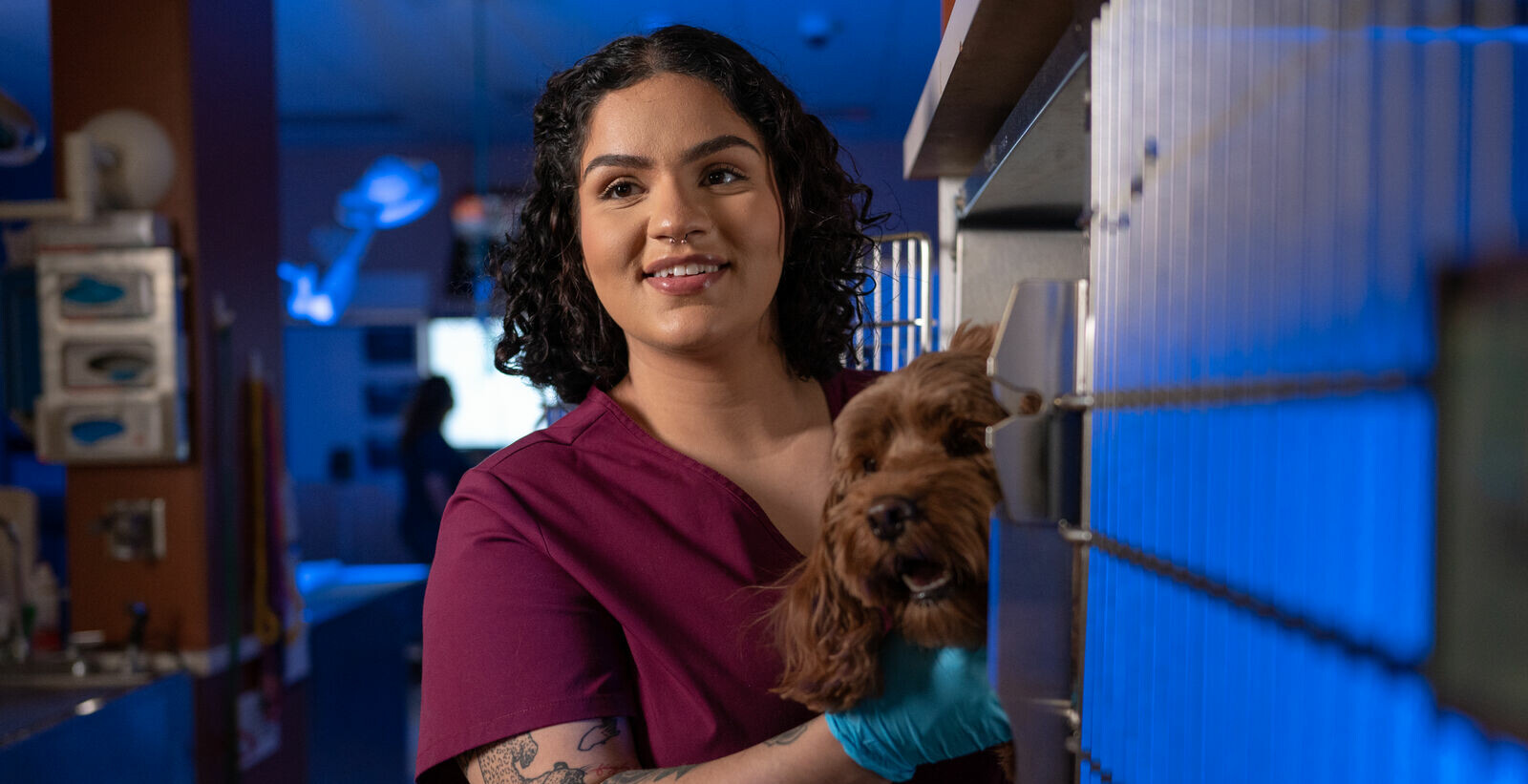
If your dog is limping or struggling to bear weight on their back leg, one possible cause is cranial cruciate ligament disease (CrCLD). At BluePearl Town 'N' Country, our surgery team treats CrCLD cases every week, helping dogs return to comfortable, active lives.
What is cranial cruciate ligament disease?
The cranial cruciate ligament (CrCL) is one of the major stabilizers in a dog’s knee joint. Over time, this ligament can weaken and eventually tear, either partially or completely. When it does, the joint becomes unstable, leading to pain, inflammation, and arthritis.
CrCLD refers to this gradual degeneration of the ligament – a process that may worsen over months or suddenly result in a full rupture.
What are the signs of CrCLD in dogs?
You may notice:
- Limping or favoring one hind leg
- Difficulty rising, jumping, or climbing stairs
- Sitting with one leg extended to the side
- Decreased activity or stamina
- Swelling or stiffness around the knee
- Sudden worsening after a mild limp
These signs can come and go, but often get worse without treatment.
How does BluePearl diagnose and treat CrCLD?
After a referral, our surgery team may perform:
- A physical exam with orthopedic evaluation
- X-rays to assess joint structure and rule out other problems
- Additional imaging (if needed) to confirm diagnosis
Treatment options often include:
- TPLO surgery, the gold standard for CrCL injuries in many dogs
- Pain management and restricted activity in mild or early onset cases
- Surgical options tailored to your dog’s size, age, and lifestyle
We’ll help you understand the risks, benefits, and expected outcomes for each path forward.
Cranial Cruciate Ligament Disease (CrCLD) in Dogs — FAQ.
Cranial cruciate ligament disease (CrCLD) is a condition affecting one of the major stabilizers in a dog's knee joint, the cranial cruciate ligament (CrCL). Over time, this ligament can weaken and may eventually tear, either partially or completely. When this occurs, the knee joint becomes unstable, leading to pain, inflammation, and arthritis. CrCLD refers to the gradual degeneration of the ligament, which can worsen over months or suddenly result in a full rupture.
Signs of CrCLD in dogs include limping or favoring one hind leg, difficulty rising, jumping, or climbing stairs, and sitting with one leg extended to the side. You may also notice decreased activity or stamina, swelling or stiffness around the knee, and a sudden worsening of symptoms following a mild limp. These signs can fluctuate but often worsen without appropriate treatment.
At BluePearl Town 'N' Country, after receiving a referral, our surgical team conducts a thorough diagnostic process. This includes a physical exam with an orthopedic evaluation and x-rays to assess joint structure and rule out other potential issues. Additional imaging may be utilized if necessary to confirm the diagnosis. Treatment options for CrCLD often include tibial plateau leveling osteotomy (TPLO) surgery, which is considered the gold standard for CrCL injuries in many dogs. For mild or early onset cases, pain management and restricted activity may be recommended. Surgical options are tailored to your dog's size, age, and lifestyle to ensure the best possible outcome.
When treating CrCLD at BluePearl, our team will guide you through the available treatment paths, helping you understand the risks, benefits, and expected outcomes for each option. Our goal is to help your dog return to a comfortable and active life, with a treatment plan customized to their specific needs and circumstances. Whether through surgery or alternative management strategies, we are committed to providing the highest level of care for your pet.
Related articles.