
In Oregon, pets are surrounded by natural beauty and natural hazards. Many local plants, mushrooms, and even household items can be toxic to pets. At BluePearl Northeast Portland, toxic ingestion is one of the most common emergencies our emergency medicine team treats. Fast action makes all the difference.
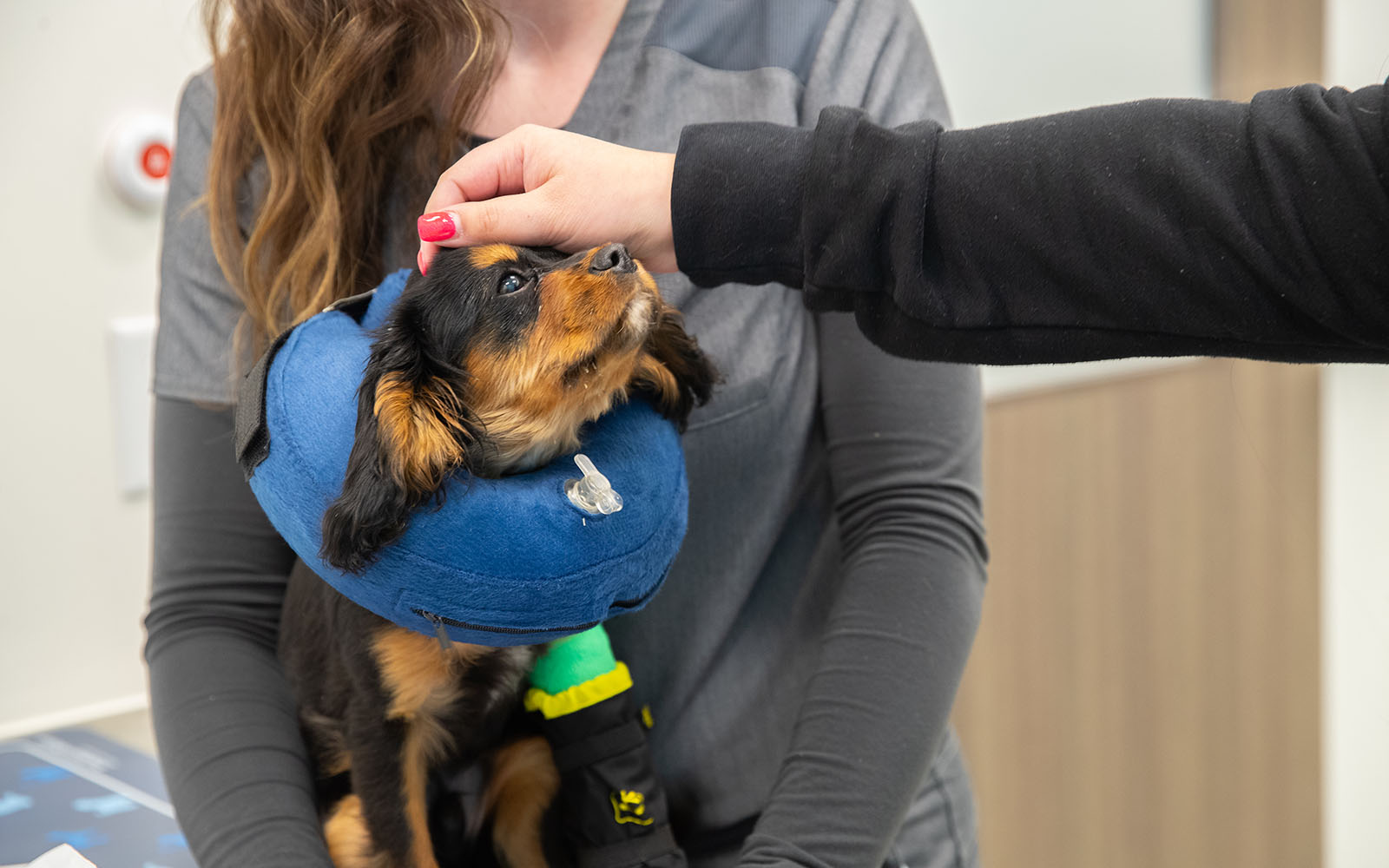
Common toxins in the Portland area.
We frequently see emergency cases involving:
- Wild mushrooms in yards, trails, and parks
- Cannabis (edibles, flower, or oils)
- Xylitol (found in sugar-free gum and baked goods)
- Chocolate, grapes, or raisins
- Over-the-counter human medications
- Rodenticides and slug bait
- Compost or moldy food from trash or garden piles
If your pet has ingested anything questionable, don’t wait. Call or come in immediately.
Symptoms of possible poisoning.
Signs may appear within minutes – or hours – and can include:
- Vomiting or diarrhea
- Tremors, seizures, or stumbling
- Excessive drooling or foaming
- Agitation or unusual behavior
- Pale gums or rapid breathing
- Loss of consciousness
What to do if you suspect poisoning.
- Remove your pet from the source
- Do not induce vomiting unless directed
- Save the product label or take a photo
- Call us or head to BluePearl Northeast Portland right away
We can administer activated charcoal, IV fluids, antidotes, or hospitalization depending on the toxin.

Toxic ingestion in pets at BluePearl Northeast Portland — FAQ.
In Portland, pets are often exposed to various natural and household toxins. At BluePearl Northeast Portland, we frequently treat emergencies involving wild mushrooms found in yards, trails, and parks. Cannabis products, including edibles, flower, and oils, are also common culprits. Xylitol, a sweetener found in sugar-free gum and baked goods, poses a significant risk, as do chocolate, grapes, and raisins. Over-the-counter human medications, rodenticides, slug bait, and compost or moldy food from trash or garden piles are additional hazards. If you suspect your pet has ingested any of these substances, it is crucial to call or visit us immediately for prompt evaluation and treatment.
Symptoms of poisoning in pets can manifest within minutes or take several hours to appear. Common signs include vomiting, diarrhea, tremors, seizures, or stumbling. You may also notice excessive drooling or foaming, agitation, or unusual behavior. Pale gums, rapid breathing, and loss of consciousness are serious indicators that require immediate attention. If you observe any of these symptoms, it is essential to seek emergency care at BluePearl Northeast Portland without delay.
If you suspect your pet has ingested a toxin, the first step is to remove them from the source of the toxin to prevent further exposure. Do not induce vomiting unless specifically directed by a veterinarian, as this can sometimes cause more harm. Save the product label or take a photo of the suspected toxin to provide valuable information to our team. Contact BluePearl Northeast Portland or bring your pet in immediately for assessment and treatment. Depending on the toxin involved, we may administer activated charcoal, IV fluids, antidotes, or hospitalization to support your pet's recovery.
Related articles.